Você deve cobrir sua webcam?

The rapid growth of remote and home-working has led to many users getting webcams or setting up Zoom equipment in their own homes, often in rooms or parts of the house where there wasn’t previously a computer.
In 2016 Mark Zuckerberg inadvertently brought attention to the risks of users being covertly monitored through their computer’s webcams or mics when he posted a now-infamous photo of his desk setup, showing his laptop with a covered webcam and blocked mic. If even the creator of Facebook blocks his, who else does? Many people, it turned out, including former FBI director James Comey.
Os riscos, revisitados ...
Plenty has changed since then both in terms of improvements to security, but also in terms of risks, and we’re going to take a short look at the best practise to stay secure with your computer’s webcam and mic. The fears people talked about in the past, of ending up beholden to remote blackmailers are much less likely than problems closer to home, such as spousal stalkerware.
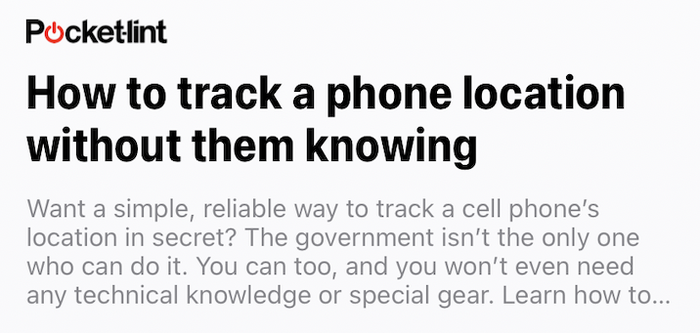
A host of these products have sprung up over recent years, and increasingly manage to sneak into otherwise safe environments. Even seemingly reputable news sources fall prey to this, with Apple News running content from Pocketlint, explicitly geared around illegal remote monitoring. There is, sadly, a market for this sort of content and product.
Dito isso, a privacidade do usuário pode ser violada por simples acidente e sem intenção maliciosa. Muitos usuários do Zoom não perceberam que suas câmeras estavam ligadas ou que, ao ingressar em uma chamada de Zoom, o host da chamada pode ter configurado a chamada para iniciar com as câmeras do usuário ligadas. Além disso, é possível entrar em uma chamada Zoom com a câmera desligada, ser colocado em uma sala de espera antes do início da chamada e, em seguida, ter a câmera ligada assim que o host admitir o usuário na chamada.
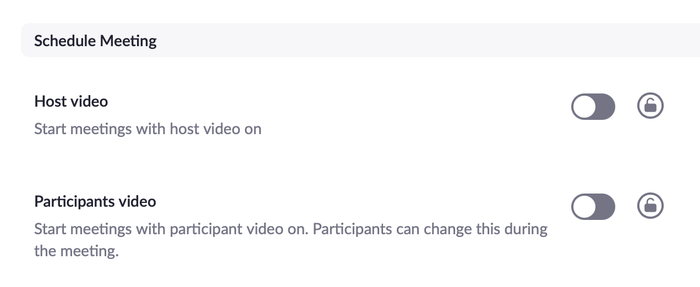
There are only a few video apps where the host can remotely enable video if the participant has turned it off after the start of the call, and Zoom is safe in this regard. It does, however, have a feature whereby the host can remotely unmute a participant’s microphone. If you’re in the habit of stepping away from your computer on long calls to get a cup of coffee whilst muted, beware that you might be unmuted without knowing about it. Similarly, if you’re joining the call from a room with other people around, their unexpected presence in your background may cause them embarrassment if they’re not expecting to be broadcast.
These inadvertent risks can be handled with a few simple precautions: covering or physically disconnecting a webcam makes things more obvious, and having a mic with a physical mute button helps.
E quanto a Alexa ou o HomePod?
Plenty of users have an Alexa or HomePod device in their home, or other forms of smart devices like thermostats or security cameras. These are all capable of broadcasting video or audio captured within the home. It’s very hard to keep tabs on these, and ultimately one must either trust the company making them or not. Both Amazon and Apple home devices may be listened to by staff in some circumstances, though there are controls that can enable users to opt in or out of parts of this.
Se alguém tem dispositivos inteligentes em casa, é sensato se comportar como se o áudio estivesse sendo gravado. Isso é potencialmente um fardo e tanto. Não é uma boa ideia comprar dispositivos inteligentes de fornecedores pequenos, não confiáveis ou desconhecidos. Quem sabe como é a segurança deles?
Dicas importantes para se manter seguro
Here’s a set of best practises we’d recommend for all users:
- Cobrir sua webcam é importante will serve as a reminder to think about security whilst using the computer. Realistically, you’re more likely to inadvertently broadcast yourself without knowing than you are to be remotely monitored by anyone else, and a cover helps make that risk obvious. Anything that makes you more security conscious is likely a good idea. You’ll see no end of ads online trying to sell plastic webcam covers: these are junk, and you don’t need them. A pedaço de fita adesiva ou uma nota adesiva é bom o suficientepara Mark Zuckerberg, e funcionará bem para você. Qualquer resíduo deixado para trás será fácil de remover. Além disso, laptops bem projetados não deixam espaço suficiente para serem fechados semdamaging themselvesquando uma tampa de plástico adicional é presa.
- Melhor ainda, use câmeras e dispositivos de áudio externos conectados fisicamente. Contar com um microfone externo e câmeras torna muito claro se eles estão fisicamente conectados ao seu computador ou não. A vantagem disso é que você pode bloquear permanentemente a câmera interna e o microfone do seu dispositivo.Camoé um bom exemplo de um produto como esse e tem o benefício adicional de aumentar muito a qualidade que um usuário obterá ao ingressar em chamadas. Cuidado com produtos que requerem a instalação de drivers ou que são de fontes desconhecidas ou não confiáveis.
- Feche seu laptop ou desligue-o quando não estiver usando-o, o que tornará mais difícil ou impossível que as pessoas acessem remotamente.
- If you step away from your Zoom call whilst muted to make a coffee, beware that a host might remotely unmute you without your knowing. If your mic has a physical mute button you’ll be OK. But if you’re using AirPods, or an internal mic, there’s no mute that can override Zoom’s settings. If you’re on a call, always assume you might be overheard.
- Mantenha o software atualizado , especialmente o software principal do telefone e do computador, e qualquer navegador que você usar.
- Não desative o firewall ou malware do seu computador . Hoje em dia, eles são habilitados por padrão em quase todos os tipos de computador e telefone, e há pouca necessidade de instalar software adicional, além de produtos específicos para monitorar o uso de webcam (veja acima).
- Esteja ciente de seu histórico . Se outras pessoas podem entrar em cena, ou você pode ter bagunça ou itens privados ao seu redor, considere esconder seu fundo durante as chamadas.
- Esteja ciente das melhores práticas gerais de segurança e certifique-se de armazenar com segurança qualquer vídeo, áudio ou fotos que você já tirou.
- Não deixe ninguém não confiável usar - ou reparar - qualquer um dos seus dispositivos . Quem sabe o que eles podem instalar ou alterar neles.